2018年8月28日星期二

Patient Matching Using Smartphones to Enhance Interoperability

"/

Successfully matching patients with the right healthcare practitioners seems to be a major issue for enhanced interoperability. An ONC report by RAND showed that in 2014, the range of patient matching across the healthcare setting was only around 50 percent.
To address the issue of health IT-related federal agencies and private sector developers are seeking upgrades with options ranging from artificial intelligence and cloud computing to blockchain technologies for an enhanced patient mediated medical records exchange. Still, the issue is not completely solved.
The first US effort sponsored by the Pew Charitable Trusts suggested that the utilization of smartphones with specific biometric features like facial recognition and fingerprint ID could enhance patient matching in a better way. But its implementation requires the systematic development of technical specifications and prototypes in addition to s support team to track the progress of this technology. This approach will also take time to build trust among patients and providers.
Robert S. Rudin, the lead author of this study and an information scientist at RAND, said "Engaging patients in solving the problem likely requires real-world pilot testing and evaluation of an array of approaches."
Robert S. Rudin further added in a statement, "Tools and methods that allow an individual’s mobile phone or smartphone to be used for improving medical record matching among different health providers appear to be particularly promising for a patient-empowered approach to the problem."

from Drugdu  https://goo.gl/QgQoHk

2018年8月14日星期二

Easy Interoperability for all mHealth Apps

"/
Several top tech companies such as Google, Amazon, Oracle, Microsoft, IBM and Salesforce have vowed to remove barriers which prevent customers from accessing their personal mHealth data whenever they need it. The announcement was made at the Blue Button 2.0 Developer Conference held in Washington D.C.
Seema Verma, administrator of The Centers for Medicare & Medicaid Services (CMS) said, “Imagine all of that data aggregated in one place; Imagine if you could combine that with your genetic information, and that you would have the ability to take that information and give it to researchers, give it to your doctors?”
Last week, CMS released an updated on their new version of Blue Button 2.0, an open API tool which would enable around 53 million Medicare beneficiaries to access five years’ worth of their data.
Mark Scrimshire, who leads the Blue Button 2.0 announced, “We’re trying to create this ecosystem where app developers can go and create tools that are really useful for beneficiaries and hopefully for the wider patient population.” 
Seema Verma further added, “CMS is leading to support MyHealthEData by releasing more data and taking action to drive interoperability and patient control of their data; We are calling on (the) industry to follow our lead and step up to the challenge. It’s time for the rest of the industry to do its part. I have called on insurers to begin releasing claims data as we did with Blue Button 2.0 and make data available to patients.”

from Drugdu  https://goo.gl/QgQoHk

De-Novo Marketing FDA Approval for Natural Cycles’ Contraception App

"/

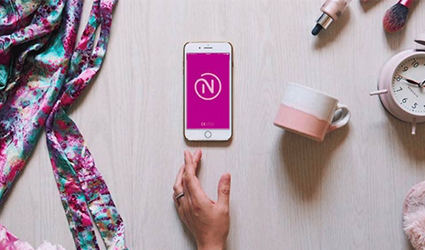
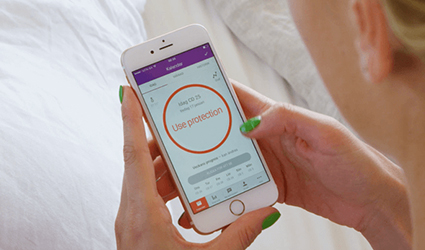
The US-FDA (US- Food and Drugs Administration) announced on 13 August that it will permit the marketing of Natural Cycles’ contraception app in the US for pre-menopausal women aged 18 years and older. This app was previously approved in the UK and is currently being investigated by various regulatory agencies. This algorithm-driven app helps in tracking menstrual cycles and informs users of their fertile status.
Dr. Terri Cornelison, the assistant director for the health of women in the FDA’s Center for Devices and Radiological Health, said “Consumers are increasingly using digital health technologies to inform their everyday health decisions, and this new app can provide an effective method of contraception if it’s used carefully and correctly; But women should know that no form of contraception works perfectly, so an unplanned pregnancy could still result from correct usage of this device.”
This contraception app is a subscription service which includes both the app and a basal thermometer. By taking the temperature in morning and submitting extra information about their cycle, the app generates details about the user’s fertility. The app is a CE certified contraceptive in Europe, which raised $30 million in funding in November 2017.
The low-to-moderate-risk levels of the app were reviewed through the FDA’s de novo premarket review pathway. The FDA announced that it would be launching “special control” criteria to shed light on its reliability, accuracy, and pregnancy prevention effectiveness for future contraception apps. But the investigations regarding robust substantiation and unplanned pregnancies while using the app are still ongoing.
from Drugdu  https://goo.gl/QgQoHk

2018年8月10日星期五

$700K Granted to Bot M.D. for International, Doctor-Interactive AI Chatbot App

"/

A total of $700,000 was raised by Bot M.D., an AI chatbot app developer for doctors, in seed funding from Y Combinator and angels, including Steve Blank, one of the inventors of the Lean Startup method.
"If you ever try searching stuff on Google, Google is a consumer-facing search engine, right?" founder and CEO Dorothea Koh commented. "So the stuff on top is always going to be WebMD, Mayo Clinic, [etc.]. These are not websites that doctors would necessarily go to for information. They want information from journals; they want information from peer review, reliable sources. And that’s exactly what Bot M.D. does for them."
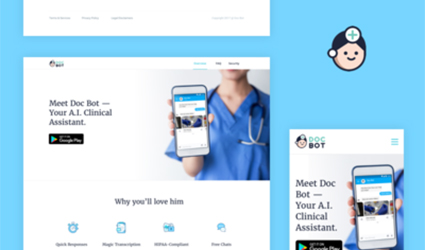
Bot M.D. is intended to be an unconventional resource of data for doctors, chiefly the information they need in their daily practice like drug interactions, medical calculators, guidelines and protocols, and information on rare diseases. Doctors can even search for medical images and videos on the app. The app uses AI to display this information in a personified and even comical chatbot.
Apart from providing information, the app also has a dictation/transcribing feature.
"In particular in Venezuela, one of our doctors told us in his hospital, they’re kind of rural and remote," Koh said. "So they have eight medical residents who have to fight over one computer at the end of the day to type up all of their case notes. So the transcription thing, which is basically automatic voice detection transcription, is basically a lifesaver because all you have to do is record it and it transcribes it and you can email a copy to yourself."
It also presents a chat feature that allows doctors to securely chat with each another, and even call Bot M.D. (the AI) if they need added information on the topic being discussed.
from Drugdu  https://goo.gl/QgQoHk

2018年8月7日星期二

App to Help Doctors, Patients Dealing with Domestic Abuse

"/

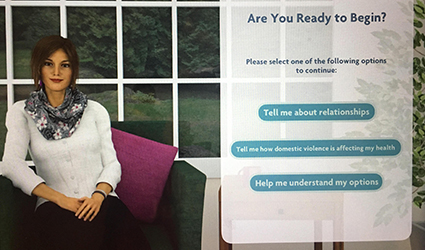
Resolve Greater Rochester and Rochester Institute of Technology researchers got together to build a new app that helps evaluate a person’s physical and mental health. The system also assists doctors when giving advice regarding domestic abuse, which according to CDC data, affects one in four women and one in seven men. The app named RITa is currently being used at primary care facilities in Rochester, New York. 
 “Family care practitioners are often the first place victims of domestic violence turn for help," Allison O'Malley, CEO of Resolve, said in a statement. "Intimate-partner violence (IPV) is a complex issue with many negative health implications, and physicians need to know what to do when patients disclose abuse or when their symptoms raise concern.”
The program is directed from a primary care physicians' tablet, though healthcare professionals also plan to introduce the system to the public, according to a statement. A feature within the app, named RITa, asks 30 validating questions to users about different facets of their relationship and health. It then suggests the doctor and patient recommendations and further actions. 
"RITa is the first application of a 'female' avatar to screen for IPV among victims,” Caroline Easton, professor in RIT's College of Health Sciences and Technology School of Behavioral Health Sciences, said in a statement. "RITa illustrates how we can combine advancements in science and technology with art and design to make a real impact in our community and provide safety for those at risk for serious harm or injury.”

$7.6M Granted to SkinVision to Expand Skin Cancer App

"/


"Th$7.6 million has been granted to SkinVision, an Amsterdam-based skin cancer screening app, as backing from active investors Leo Pharma and PHS Fund, with supplementary aid from unnamed new sponsors which the company called "high net worth impact investors."
The company was launched in 2012 as Skin Scan and received a large funding of a $3.4 million in 2015, followed by extra support from Leo in 2017. The total funding of the company including the $7.6 million, sums up to $13 million.is funding will be instrumental in reaching our target of saving 250,000 lives by 2027," CEO Erik de Heus said in a statement. "We have seen huge growth in the past year and this investment will help us to expand our insurance provider partnerships, ensuring that as many people as possible are provided access to the technology."
Though SkinVision is chiefly trying to offer the service through insurance providers, they also propose an alternative that reaches consumers directly which has aided them to prepare their algorithms.
"The camera technology allows customers to take a photo automatically," de Heus told MobiHealthNews. "So when you hold your phone next to the lesion, the camera automatically detects the lesion and takes a photo. That photo is then run through a whole pipeline of machine learning networks that recognize the image and rate it as high, low, or medium risk; a traffic light system. This is all done within 20 seconds and this message is provided back to the customer. If it’s high risk, within 48 hours our dermatologists can get back to the customer."
SkinVision foresees a US launch and hence, will also utilize the funding to work towards an FDA submission.
from Drugdu  https://goo.gl/QgQoHk

Alert Sensor App for Smokers

"/

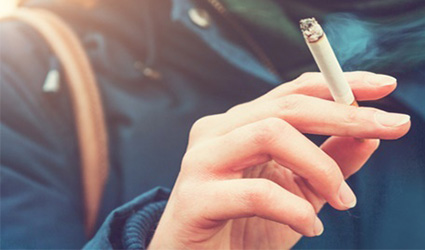
By tracking arm and body motion, it is possible to develop an automatic alert system to send video reminders about the benefits of quitting tobacco by using wearable sensor technology.
A research team from the Case Western Reserve University created the sensors to detect arm and body motions associated with smoking. The app then automatically sends 20 to 120-second video messages to smokers regarding the health and financial benefits of not smoking. 
The researchers claimed that this mobile alert system might be the first app which combines an existing online platform, mindfulness training and a personalized plan to quit smoking. They found that the technology demonstrated more than 98-percent accuracy in sensing “lighting up” from other similar motions. 
Ming-Chun Huang, an assistant electrical engineering and computer science professor who led the technical part of this study said, “We’ve been able to differentiate between a single motion, which could be confused with eating or drinking, and a sequence of motions more clearly linked to the act of smoking a cigarette.”
This system was tested last year by a research team of electrical engineering and computer science departments at the Case School of Engineering in association with a clinical psychologist at the Case Western Reserve School of Medicine.
The post Alert Sensor App for Smokers appeared first on Drugdu.com
from Drugdu  https://goo.gl/QgQoHk

Investigation against Natural Cycles Contraceptive Tracker App

"/

Natural Cycles, an app which includes both a contraceptive and a fertility tracker, has again become the target of a regulatory investigation due to various claims made in its advertisements.
According to a statement in The Guardian, the UK’s Advertising Standards Authority has kicked off a formal investigation into the Swedish company after getting three complaints regarding the app and its paid advertising on social media sites like Facebook.
Natural Cycles was cofounded by a nuclear physicist named Dr. Elina Berglund and her husband Dr. Raoul Scherwitzl. Natural Cycles is a subscription service which includes a basal thermometer and an app. The temperature has been noted in the morning and the app’s algorithm generates insights about the user’s daily fertility. This product is a CE certified contraceptive in Europe, which raised around $30 million in funding last November.
Earlier this year, Södersjukhuset hospital in Stockholm, Sweden filed a complaint to the Medical Products Agency (MPA) after it found that 37 women among 668 became pregnant in an unplanned way while using the app. Natural Cycles advertised that it would exceed a 93 percent success rate. The company claimed that these results showed a 95 percent success rate, 2 percent higher than the advertising claims.
The company announced wrongly that the Medical Products Agency (MPA) had closed all the cases cited by Södersjukhuset hospital. It was later reported that the MPA had concluded only the first step of its investigation, and are going “to escalate the ongoing market surveillance investigation to review parts of the documentation that was compiled as a justification for the CE mark certification.” The investigation is currently ongoing. 
from Drugdu  https://goo.gl/QgQoHk
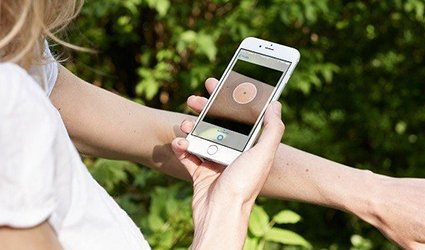
Photo Editing Apps Trigger Body Dysmorphic Disorder

"/
Body Dysmorphic Disorder

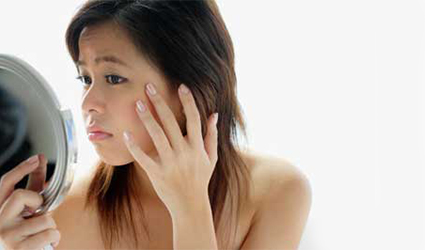
Due to widespread photo-editing technology through web applications such as Facetune and Snapchat, the idea of physical "perfection" has become an epidemic among social media users.
A research team from Boston Medical Center (BMC) argues that a dramatic change is occurring in regards to people's perceptions of beauty throughout the world and strongly influences a person's self-esteem and can even trigger body dysmorphic disorder.  
Body Dysmorphic Disorder (BDD) is defined as an excessive preoccupation to hide their imperfections, by getting engaged in repetitive behaviors such as skin picking, and an excessive amount of consultations with dermatologists or plastic surgeons to change their appearance. An estimated 2% of the population is affected with this disorder which falls in the obsessive-compulsive spectrum.
The research has shown that mostly teen girls who manipulate their photos were more prone to dysmorphic disorder. Around 55 percent of plastic surgeons report that most of their patients perform plastic surgery just to look good in selfies.
Neelam Vashi, MD, the director of the Ethnic Skin Center from BMC and Boston University School of Medicine, said "A new phenomenon called 'Snapchat dysmorphia' has popped up, where patients are seeking out surgery to help them appear like the filtered versions of themselves."
The investigators claim that surgery is not the right option, since it may worsen underlying BDD.
Neelam Vashi further added, "Filtered selfies can make people lose touch with reality, creating the expectation that we are supposed to look perfectly primped all the time; This can be especially harmful for teens and those with BDD, and it is important for providers to understand the implications of social media on body image to better treat and counsel our patients."
from Drugdu  https://goo.gl/QgQoHk