2018年7月26日星期四

Screening of Pancreatic Cancer via Smartphone App

The survival rate of pancreatic cancer is considered as only 9 percent by assessing the past five-year survival rate. There are no proper symptoms or screening tools to detect cancer in advance in order to mitigate the advance of the disease.
A research team from the University of Washington have devised a mobile app named BiliScreen which allows people to be screened for pancreatic cancer by taking a smartphone selfie. This app uses a smartphone camera, computer vision algorithms and machine learning tools to assess bilirubin levels in the white part of the eye named sclera since jaundice is considered as one of the earliest symptoms of pancreatic cancer. The eyes and the skin become yellow colored due to the accumulation of bilirubin in the blood caused by jaundice.
Alex Mariakakis, the lead author and a doctoral student at the Paul G. Allen School of Computer Science & Engineering said, "The problem with pancreatic cancer is that by the time you're symptomatic, it's frequently too late; The hope is that if people can do this simple test once a month — in the privacy of their own homes — some might catch the disease early enough to undergo treatment that could save their lives."
Unlike a blood test to check bilirubin levels, BiliScreen is a non-invasive, user-friendly tool used to monitor bilirubin frequently to detect pancreatic cancer in advance. The next step will be to test the app on a wide range of patients who have a high risk of jaundice followed by pancreatic cancer.
from Drugdu  https://goo.gl/QgQoHk

A Scientifically-Supported App for Early Stage Dementia by SMART Brain Ageing

SMART Brain Aging, Inc. announced its one-on-one patient intervention program for aging brain health, Brain U Online, now available to adults above age 50 via online subscription and iOS app, Brain U Lite. Five years of clinical trials were carried out with more than 3,000 participants at Harvard Medical School/Boston University School of Medicine to develop this new program.
Brain U Online and Brain U Lite are the world’s first scientific programs for aging adults and those with early-stage dementia. The programs were proven to delay the progression of dementia by up to 2.5 years and mitigate negative cognitive impacts by up to 45 percent when used immediately after physical exercise.
Dr. John DenBoer, geriatric clinical neuropsychologist and researcher is the mastermind behind Brain U Online which features more than 20,0000 exercises focused on aspects such as speech and language, processing speed, executive functioning, memory, attention and concentration. The iOS app, Brain U Lite, compiles numerous exercises for practice and is designed to be used “on the go” whilst exercising or directly afterward.
Brain U Online is more of a program common to therapy which uses novel learning to stimulate areas of the brain that release neuroprotective chemicals, preventing the brain cortex from shrinking, and subsequently helping to delay cognitive impairment. 
Dr. Paul Nussbaum, clinical neuropsychologist and Adjunct Associate Professor in neurological surgery at the University of Pittsburgh School of Medicine stated “Dr. DenBoer and his team have developed a program, based on many years of research and backed by scientific evidence, that has had a positive impact on improving and preserving the lives of thousands of aging individuals and dementia sufferers.”
from Drugdu  https://goo.gl/QgQoHk

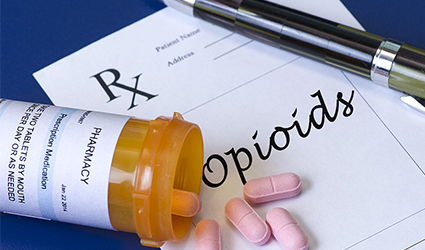
Surgeons Turn to Mobile App for Help with Opioid Prescriptions

In a bid to better handle the prescription and workflow processes of a practice, the orthopedic surgeons at Affiliated Oral and Maxillofacial Surgeons of Maryland have come up with a fresh mobile medication management application which allows each doctor to write about 30 prescriptions per day for controlled substances, including opioids for pain management.
It is a boon for patients where their prescriptions are electronically sent to a pharmacy, straight after their surgery rather than going through the tedious process to physically drop off the prescription.
This coincides with Maryland’s mandate, effective from July 1, which enables prescribers to have access to the state’s prescription drug monitoring program (PDMP) before prescribing controlled substances. A patient may claim to have lost a prescription, for instance, but the PDMP may show that the prescription was filled. This available information within the prescribing workflow is considered vital by many to comply with the mandate.
A consensus on the resolution to prescribe fewer opioid medications when appropriate was sought by Affiliated Oral and Maxillofacial Surgeons as mobile prescribing makes it simpler to send refills. This also prevents the hazard of leftover pills being ingested by other people, especially children.
It makes communication between the three offices faster and simpler in comparison to phone calls or e-mails as this practice uses secure communications software.
As an oral and maxillofacial surgeon, I treat patients with surgical proceduresIn my specialty, patients tend to be in a fair amount of discomfort following their procedure,” said Kevin Schwartz, DMD, a surgeon at Affiliated Oral and Maxillofacial Surgeons. “With the mobile medication management application, I can be more confident in prescribing because I have access to more information.”
from Drugdu  https://goo.gl/QgQoHk

Glucose Monitoring App Through Medtronic-Nutrino Partnership

Medtronic, a medical technology company, and AI-powered personalized nutrition platform Nutrino, have entered into a partnership. The FoodPrint Report technology of Nutrino is slated to be integrated into the iPro2myLog app of Medtronic, a platform which offers continuous glucose monitor enabling users to gain critical insights into their glucose levels.
Doctors and clinicians will be able to observe the food logged into by a person during their iPro2 cgm evaluation.
The new tool is anticipated to drive a strong behavioral change by providing easy to communicate personal insights about the impact of food on diabetes. Users will be able to observe through the newly integrated technology how their bodies react to different foods and help gain crucial understanding of the links between a meal and glucose variability.
Meals can be logged by users by clicking a picture of all food they consume. Following this, each food entry is matched by the AI-powered program with the user’s glucose levels after the meal. The app is synched with the patient’s sensor glucose data every six days and a Pattern Snapshot report and a FoodPoint report is created. Users will be able to see all their recorded meals with the aid of the FoodPoint report with an accompanying score of A, B, C, D or F depending on the glucose reaction of the user to the meal.
from Drugdu  https://goo.gl/QgQoHk